
When dealing with used or surplus printer cartridges, there is one rule you absolutely must follow: do not throw them in the trash. Printer cartridges are classified as e-waste due to their complex composition of plastics, metals, and residual inks/toners. Your primary options for responsible disposal are clear: recycling, donating, or, if they are new and unused, selling them to a specialized buyback service.
The Environmental Imperative: Why Disposal Matters
The scale of the disposal problem is enormous: an estimated 350 million printer cartridges are sent to landfills globally every year. This volume of e-waste introduces materials that take centuries to decompose and can leach hazardous substances into soil and groundwater.
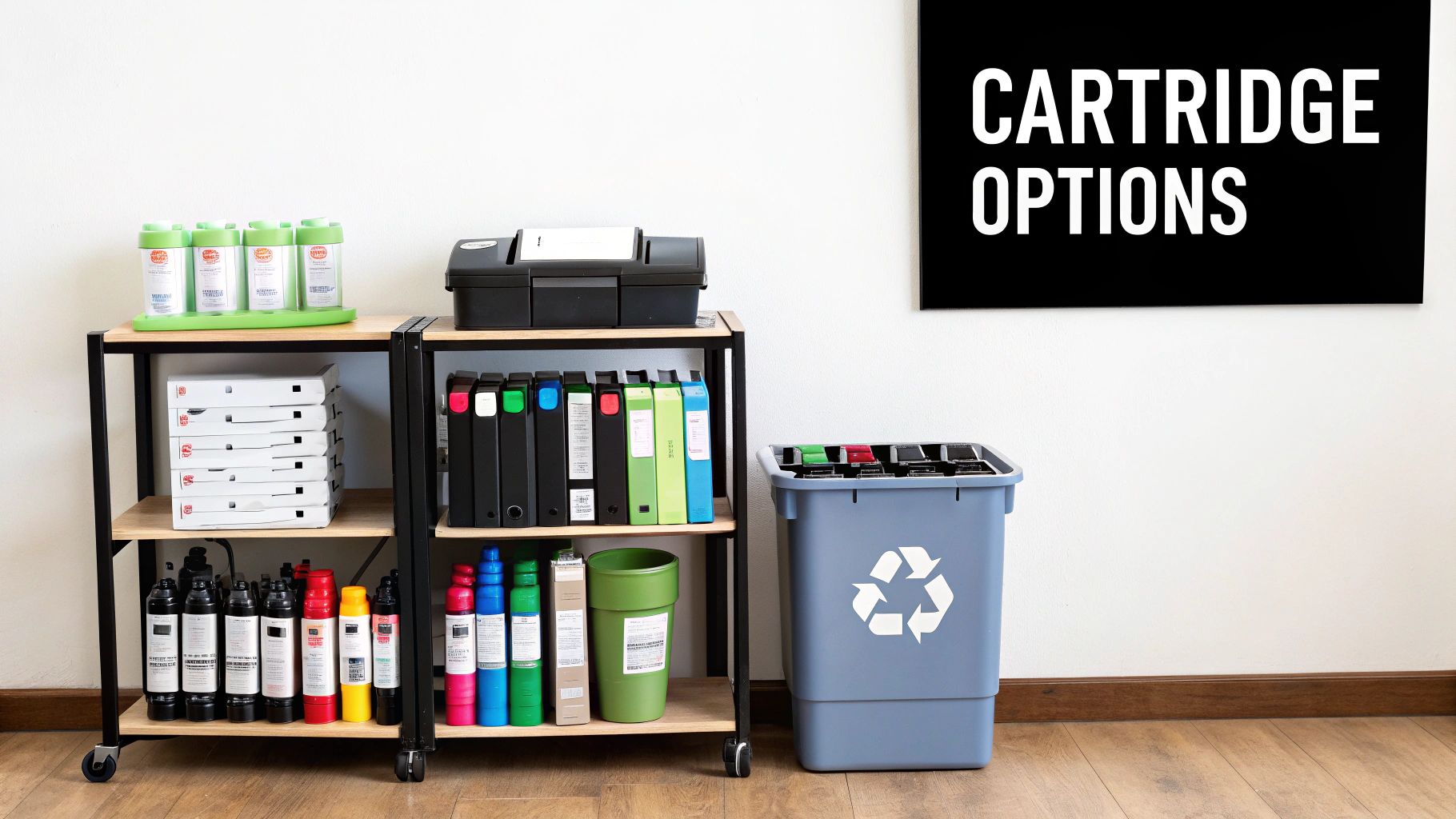
Choosing a responsible disposal method is critical. It prevents environmental contamination, conserves valuable raw materials, and supports the circular economy by extending the life of existing products.
Comparing Your Core Disposal Methods
The best disposal strategy hinges entirely on the condition of your inventory: whether you possess used OEM cartridges destined for recycling, or new, unused surplus stock eligible for revenue generation.
For instance, a small operation may find the convenience of a Retail Drop-Off ideal for a few used cartridges, while a large business with recently upgraded equipment could capitalize on a Paid Buyback Service to convert hundreds of unused items into significant cash flow.
Printer Cartridge Disposal Options at a Glance
Use this table to quickly determine the optimal path based on your goals (convenience, environmental impact, or financial return).
| Disposal Method | Best For | Potential Cost/Revenue | Effort Level |
|---|---|---|---|
| Manufacturer Programs | Used, genuine (OEM) cartridges from a single brand (e.g., HP, Canon). | Free (includes prepaid shipping). | Low |
| Retail Drop-Offs | Low volume of used cartridges from individuals or small offices. | Free (may offer minor store credit). | Low |
| Donation | Used cartridges intended to support schools or non-profits. | None (potential tax deduction). | Low to Medium |
| Paid Buyback Services | New, unused, and unexpired OEM surplus cartridges. | Revenue-generating (Cash Paid). | Medium |
Maximizing Value: Prepping Cartridges for Hand-Off
A few minutes of preparation can drastically affect both the cleanliness of the recycling process and the monetary value you recover from selling new stock. Proper sorting is essential.
1. Containing Used Cartridges (Focus: Containment)
The primary concern with used cartridges is toner or ink containment. Residual powder or liquid can leak and create a significant mess.
- If available, use the original packaging—it was designed to seal the cartridge perfectly.
- If the original box is gone, place the used cartridge into a sturdy, sealable plastic bag (e.g., Ziploc or 2-gallon freezer bag). This prevents leakage during storage and transit.
2. Protecting New Cartridges (Focus: Preserving Value)
The value of unused cartridges is directly tied to the condition of the Original Equipment Manufacturer (OEM) box. Scrutinize the following details:
- Box Condition is King: Avoid writing on, tearing, or placing shipping labels directly onto the OEM box. Cosmetic damage can slash resale value by 50% or more.
- Check Expiration Dates: Ink cartridges have dates printed on the box. Most buyers require at least one year of shelf life remaining. Toner technically does not expire, but its demand may drop if the corresponding printer model is obsolete.
Value Preservation Tip: Treat the outer packaging of a new cartridge like the product itself. Any damage signals that the product inside may be compromised, leading to a much lower buyback quote.
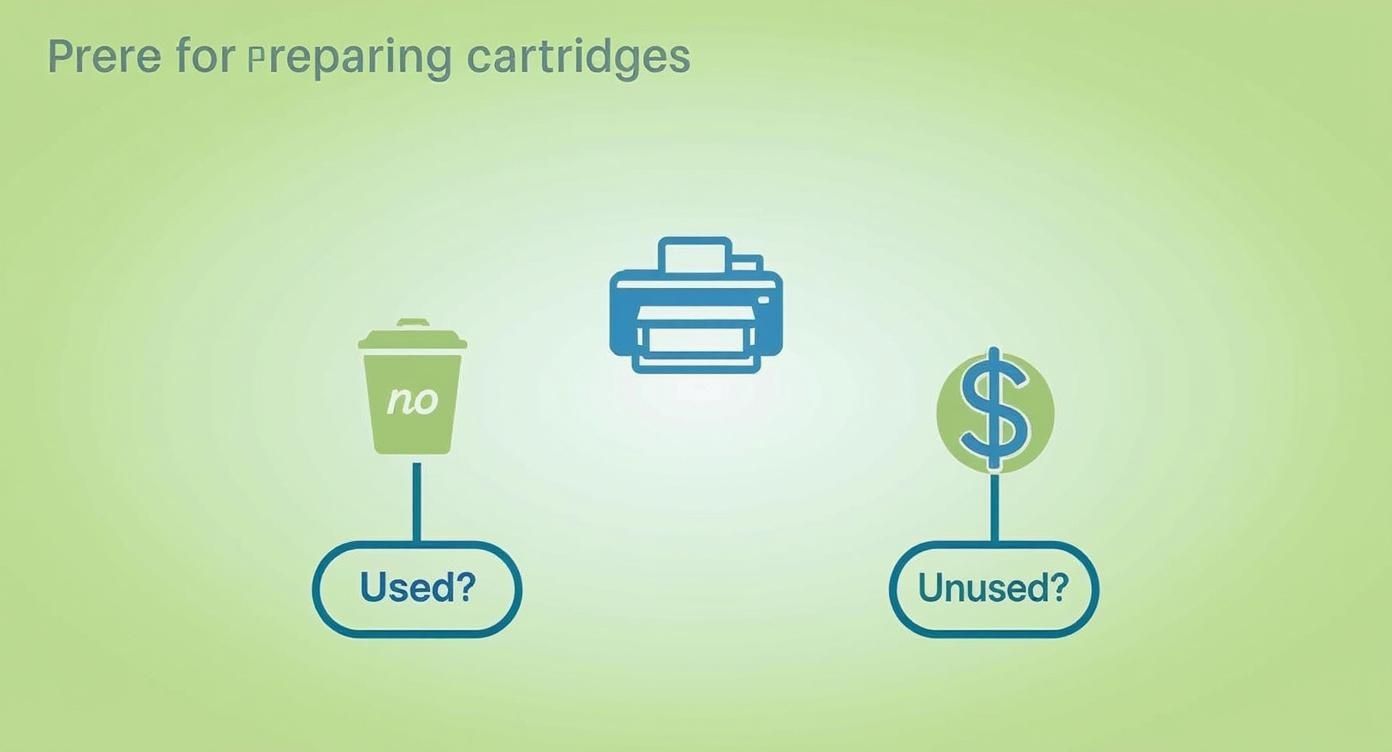
Detailing Your Top Disposal Options
Path 1: Used Printer Cartridges (Recycling & Donation)
For empty cartridges, responsible, cost-free disposal is the goal. You should never pay a fee to dispose of used ink or toner.
- Manufacturer Take-Back Programs: Brands like HP (HP Planet Partners), Canon, and Brother offer free mail-in recycling. They provide prepaid shipping labels or boxes, making bulk returns seamless.
- Retail Drop-Off Locations: Stores such as Staples and Office Depot maintain collection bins. This is ideal for individuals or small batches that can be dropped off during a routine supply run.
- Donating to Charity: Many local schools and non-profit organizations collect empties as a fundraiser, often receiving a small payment ($1 or less) per cartridge, helping both the community and the environment.
Path 2: Unused Cartridges (Paid Buyback Service)
New, unopened cartridges are a liquid asset. This is the only path that actively generates revenue.
Specialized paid buyback services (like Toner Connect) purchase surplus, genuine OEM supplies directly from businesses. This is especially advantageous for companies that have recently upgraded their printer fleets, leaving them with thousands of dollars' worth of obsolete, but brand-new, stock.
In-Depth Comparison of Cartridge Disposal Methods
This table summarizes the core differences across the three major methods:
| Method | Accepted Cartridges | Logistics & Shipping | Financial Outcome | Environmental Impact |
|---|---|---|---|---|
| Recycling (Retail/Municipal) | Used/empty OEM & compatible cartridges. | You drop them off at a local collection point. | Minimal (or none). May receive small store credits. | High. Prevents landfill waste by breaking down materials. |
| Manufacturer Take-Back | Used/empty genuine OEM cartridges only. | Manufacturer provides free prepaid mail-in labels/boxes. | None. Free recycling service. | High. Ensures proper recycling by the original maker. |
| Paid Buyback Service | New, unused, in-box OEM cartridges only. | Buyback company provides free, prepaid shipping after quote. | Positive (Cash is paid to you). | High. Puts unused products back into circulation, avoiding waste. |
Handling Logistics and Documentation
Secure Packing is Non-Negotiable
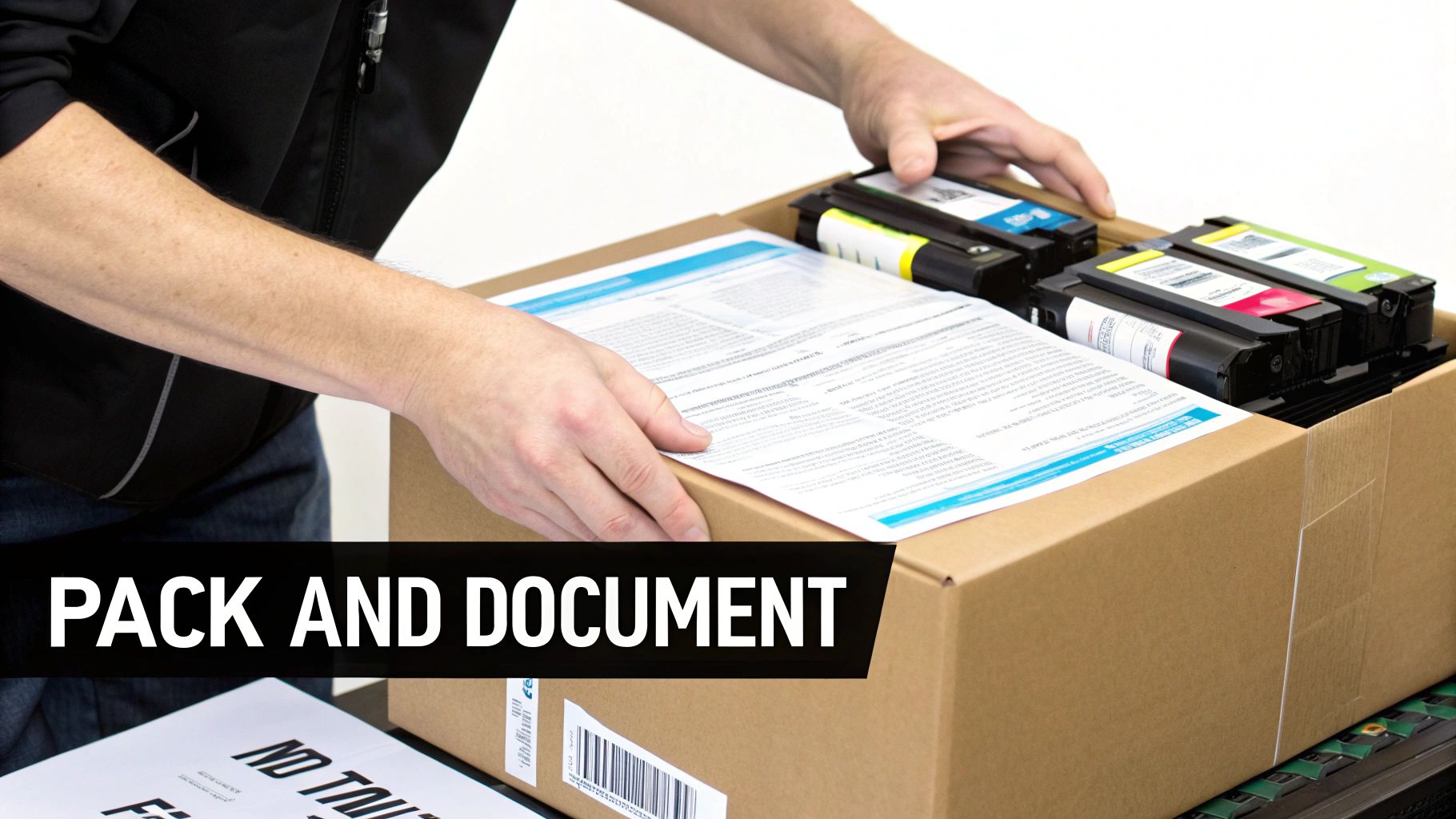
To ensure maximum value and prevent leakage, cartridges must be packed securely. Stop them from bouncing around inside the shipping box.
- Used Cartridges: Must be sealed in plastic bags. Place these at the bottom of the shipping box.
- New Cartridges: Must be protected by ample packing materials (peanuts, bubble wrap) to prevent cosmetic damage to the outer boxes.
- Pro Tip: Never ship a new, unboxed cartridge loose with used ones; the risk of an accidental leak ruining the new product's value is too high.
The Necessity of Detailed Documentation
A detailed packing list is vital for a smooth transaction and accurate payment, particularly for buyback services. Include:
- Itemized Contents: List every cartridge model number (e.g., HP 952XL).
- Quantities: Note the exact count for each model.
- Condition: Clearly mark each item as "New/Unused" or "Used/Empty."
The Market Perspective: Sustainability Meets Profit
The choice to responsibly dispose of cartridges is not just environmental; it’s economic. The global market for printer cartridge recycling was valued at USD 2.5 billion in 2023 and is projected to reach USD 4.8 billion by 2032. This robust growth is driven by stricter e-waste laws and corporate sustainability mandates.
By selling your surplus or recycling your empties, you are actively participating in a major global industry that benefits both the planet and the economy.
Frequently Asked Questions (FAQ) 😊
Here are answers to common questions about cartridge disposal! :D
Q: Can I just throw empty cartridges in the regular trash bin?
Absolutely not. Cartridges are classified as e-waste due to their components (plastics, metals, chemicals). Throwing them in the trash is illegal in many jurisdictions and causes unnecessary environmental pollution in landfills.
Q: What is the difference between a Remanufactured and a Compatible cartridge?
A Remanufactured cartridge is an original OEM cartridge that has been cleaned, refilled with ink/toner, and professionally tested (a refurbished original). A Compatible cartridge is a brand-new copy made by a third-party company (not the original printer manufacturer). Buyback services generally only accept genuine OEM cartridges.
Q: Why is the box condition so important for selling unused cartridges?
The box condition is proof of the product's authenticity and untouched state. A pristine, factory-sealed box guarantees the highest buyback price because the item can be resold as "new" without question. Any damage (writing, tears, labels) lowers its market value significantly.